Own productB2B SaaS · AI● Live pilot

Cohivo

Scope and change control for agencies. Every “can you also…” checked, priced and approved before the work starts.

Role
Founder. Strategy, UX, UI, design system and engineering
Timeline
September 2026 to now
Status
Live waitlist, guided pilot with agencies
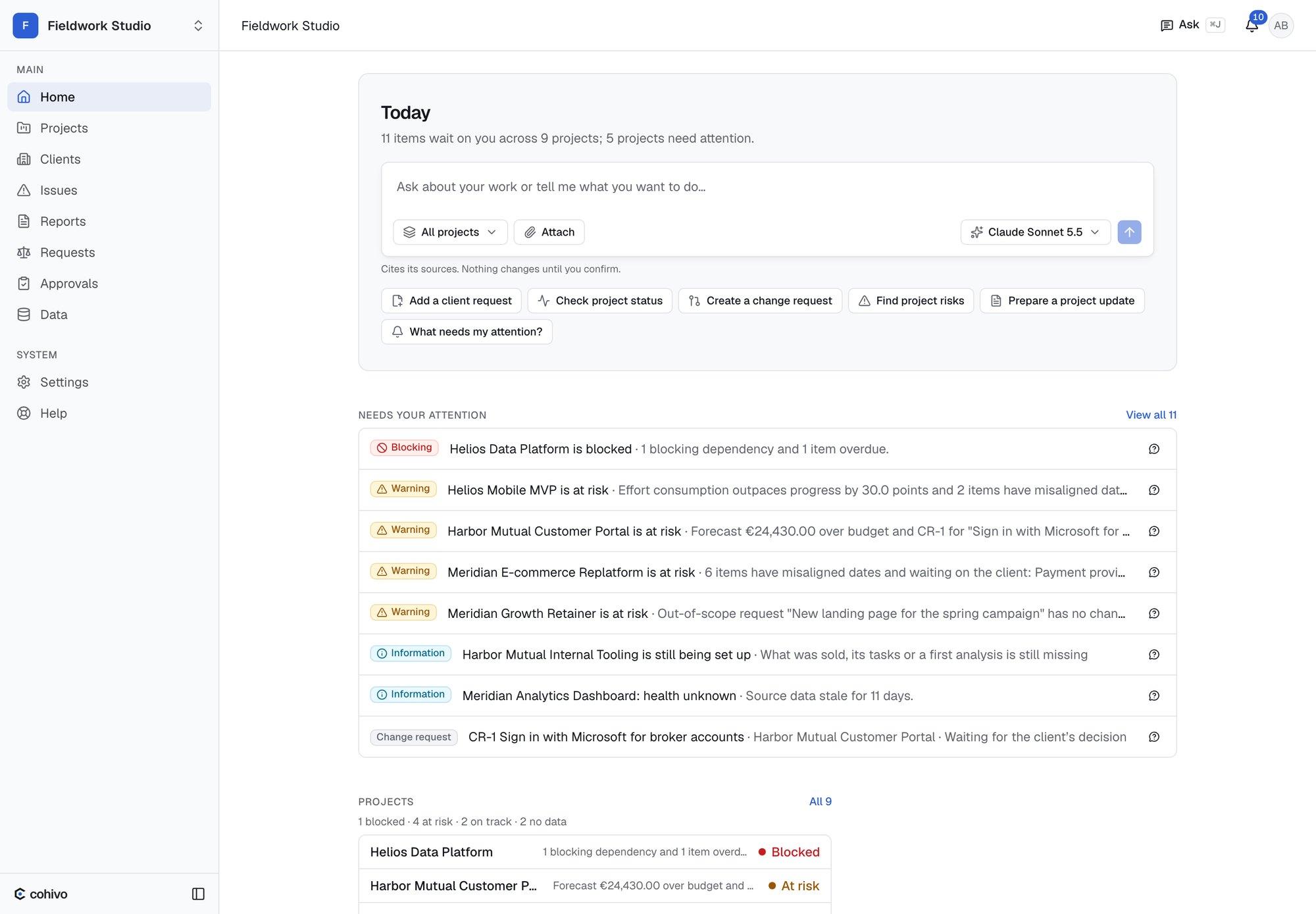
Cohivo Today screen: an assistant input and the list of items across projects that need attention, from blocked work to a change request waiting on the client
Today: everything across the agency’s projects that needs a decision, in one queue. Demo workspace “Fieldwork Studio”, a fictional 40-person agency.
DesignedProduct strategy · Positioning · UX & UI · Design system · Competitor research
ShippedNext.js · TypeScript · Supabase · Postgres RLS · Claude API · Playwright
01 · The problem

Scope creep doesn’t arrive as a change request.

Agencies of 10 to 100 people sell projects against a statement of work, then deliver them through a task tool, a time tracker and a lot of email. When a client writes “can you also…”, nobody checks the agreement. Scope gets argued from memory, pricing the change takes days, and the work usually starts before anyone agrees a price.

Each small yes looks harmless. Together they decide whether a project makes money, and the agency only finds out when the invoice conversation goes badly.

02 · The reframe

From “AI project controller” to one sharp job.

The first brief was broad: an AI controller watching scope, budget, dates, capacity and dependencies across a portfolio. A strong vision, and a hard first purchase. I researched more than twenty scope-creep tools that appeared in 2026: they all ship the same freelancer loop, and none of them knows what the team is actually doing.

BeforeAn AI controller for fifteen kinds of project insight
AfterStop scope creep before it eats your margin.
03 · Principles

Trust is the product. So money never comes from a language model.
Numbers from rulesPrices, hours and dates come from the agency’s rate card and real availability. AI drafts the wording and cites its sources.
Evidence before assertionEvery verdict links to the clause, task, time entry or message behind it, with a stated confidence.
People approveNothing touches the plan, the task tool or the client until someone on the team says yes.
Clients see only what’s sharedA redaction gate means cost, rates and margin can’t reach the client portal.
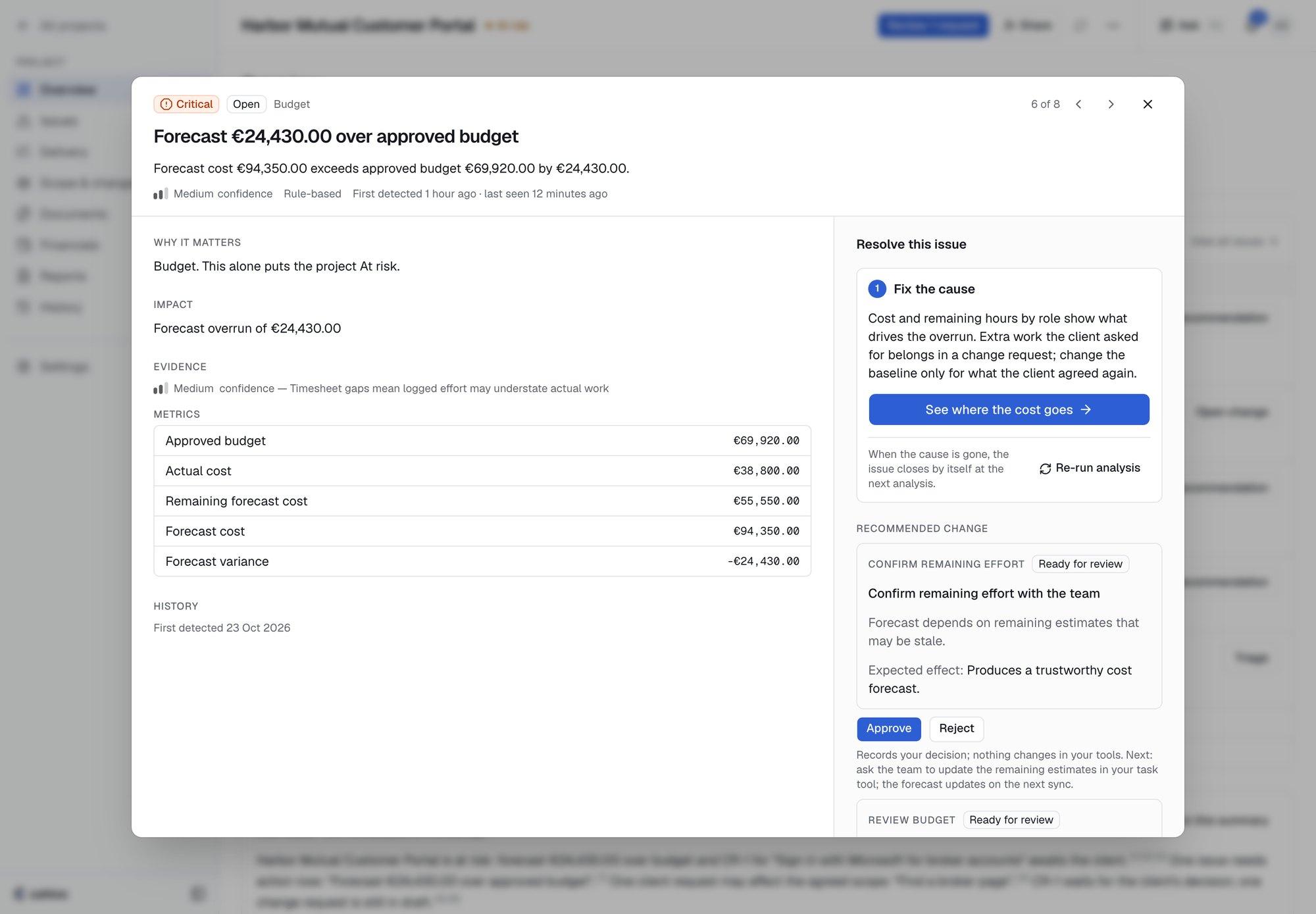
An issue: forecast €24,430 over the approved budget, with confidence, the metrics behind it and a recommendation to fix the cause first
Evidence before assertionA finding shows its confidence, the numbers behind it, and what to fix first.
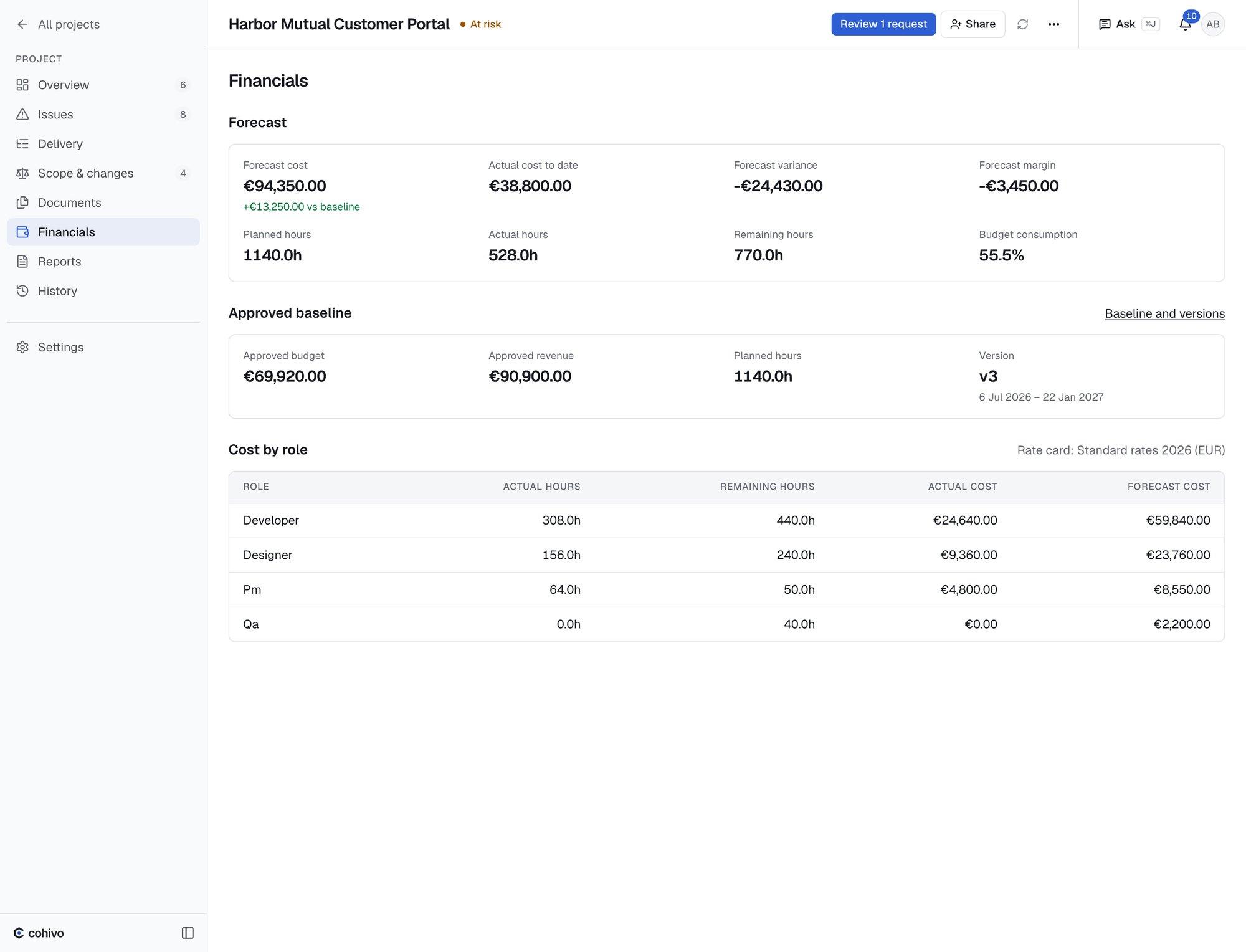
Financials: forecast, approved baseline and cost by role, calculated from the agency's rate card
Numbers from rulesForecast, baseline and cost by role, all calculated from the rate card, never by a model.
04 · The flow

From a client’s email to the plan, in four steps.

Every screen below is the running product, shown with requests from the demo workspace: an insurance client asking for a few “small” additions to their customer portal.

Step 1

The ask is recorded and checked against the agreement.
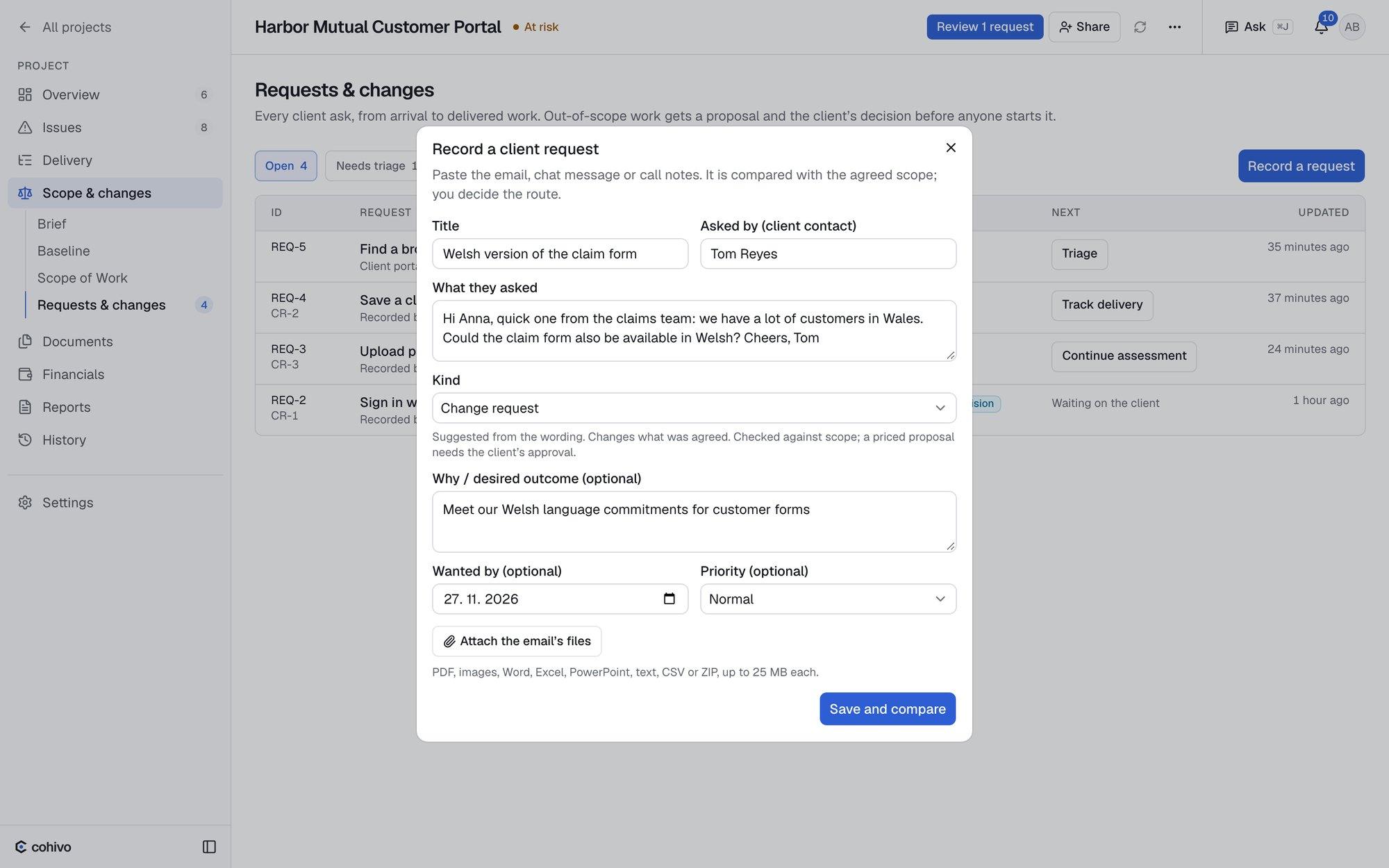
Record a client request: the client's email pasted in, who asked, the kind of request and the desired outcome
Fig. 1 — The project manager pastes the client’s email. No form for the client to fill in.
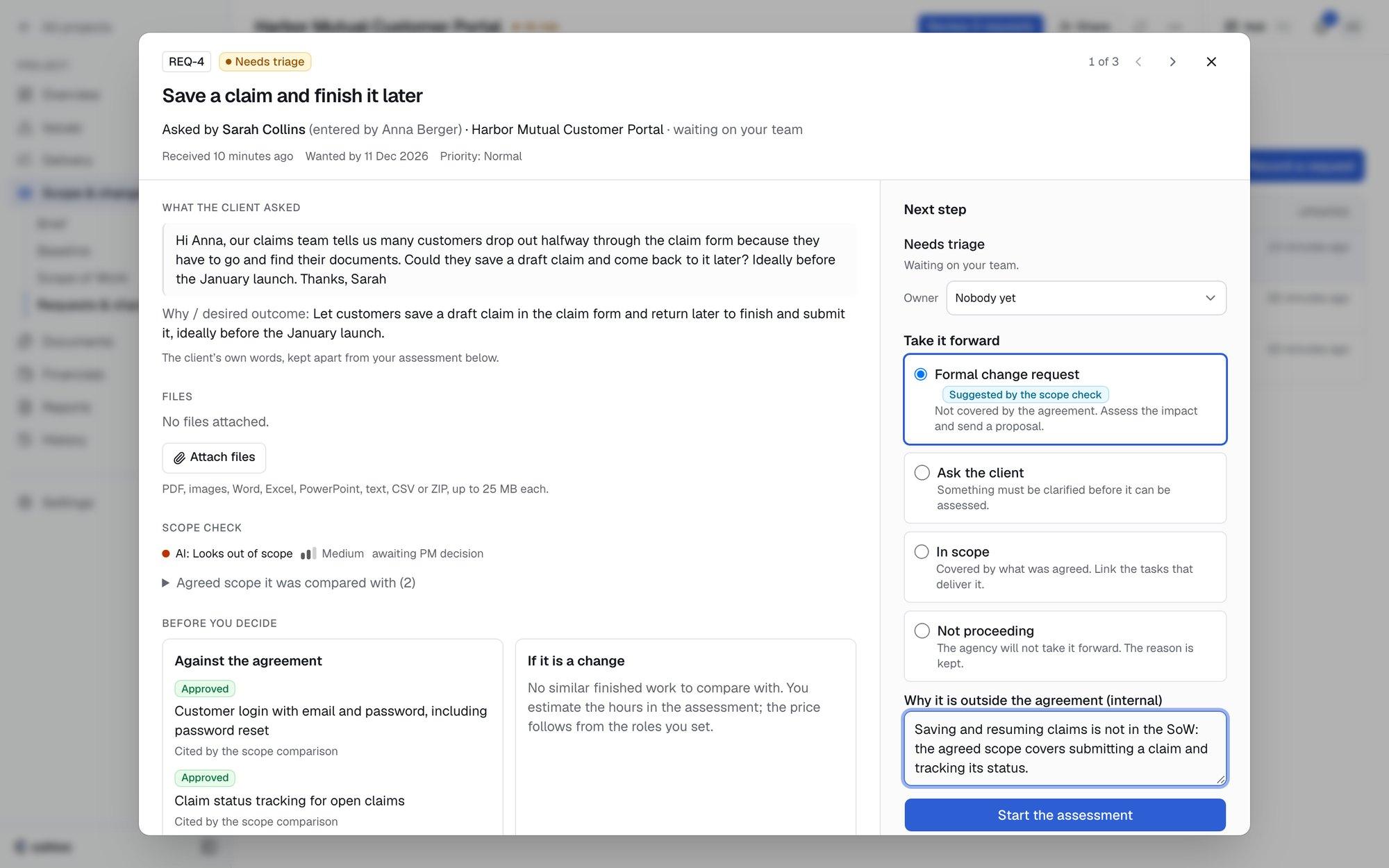
Triage: the client's ask next to the agreed scope, a scope check suggesting a formal change request, and options to take it forward
Fig. 2 — Triage puts the agreement next to the choice. The scope check suggests a route; a person picks it.
Step 2

Know what it costs before you answer.

Priced from the agency’s own rates and similar past work: price, cost and margin as a low–expected–high band, the project before and after, and whether the team has the capacity.
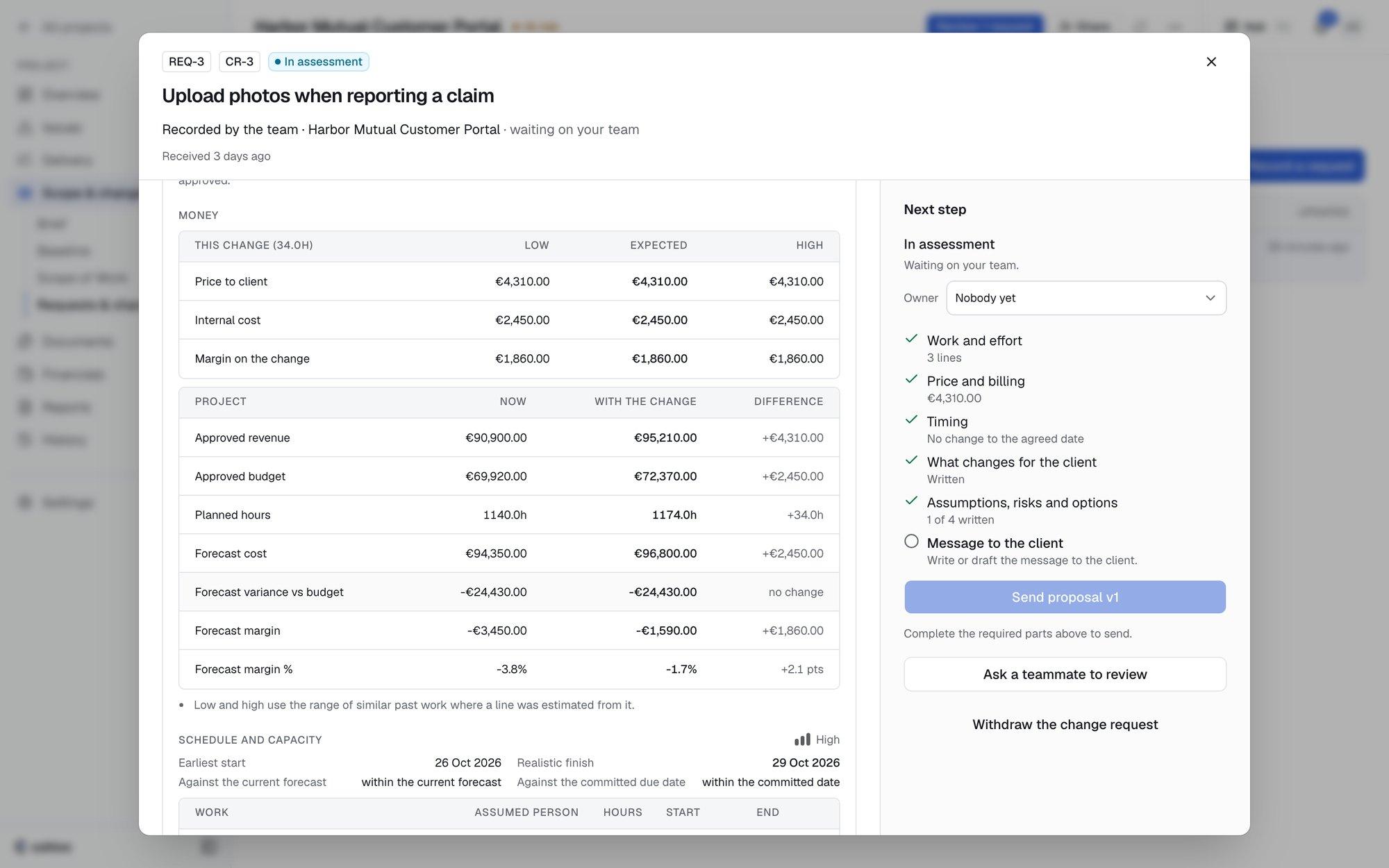
Change impact: a €4,310 change for 34 hours, internal cost and margin, the project's revenue, budget, hours and margin now and with the change, and the realistic finish date
Fig. 3 — A 34-hour change at €4,310 lifts the project’s margin by 2.1 points, and still lands within the committed date.
Step 3

The client decides on a proposal, not on a thread.

A no-login link or the client portal: price, effort, timing and the work included, then approve, ask a question, or keep the original scope. The answer is recorded against exactly that version.
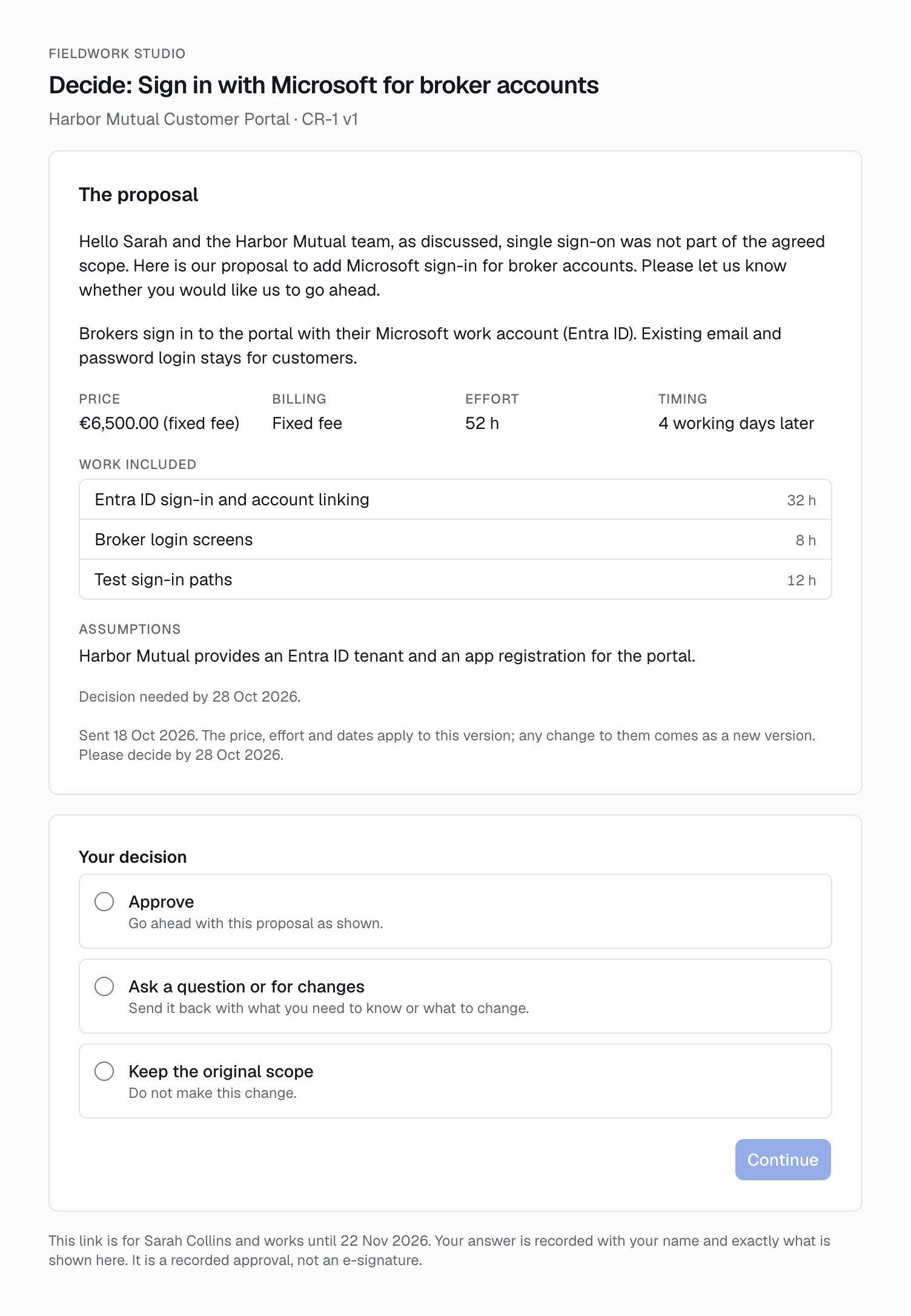
Decision link for the client: Sign in with Microsoft for broker accounts, €6,500 fixed fee, 52 hours, work included, and the options approve, ask a question or keep the original scope
Fig. 4 — The decision link. Written for the client, with no internal cost or margin.
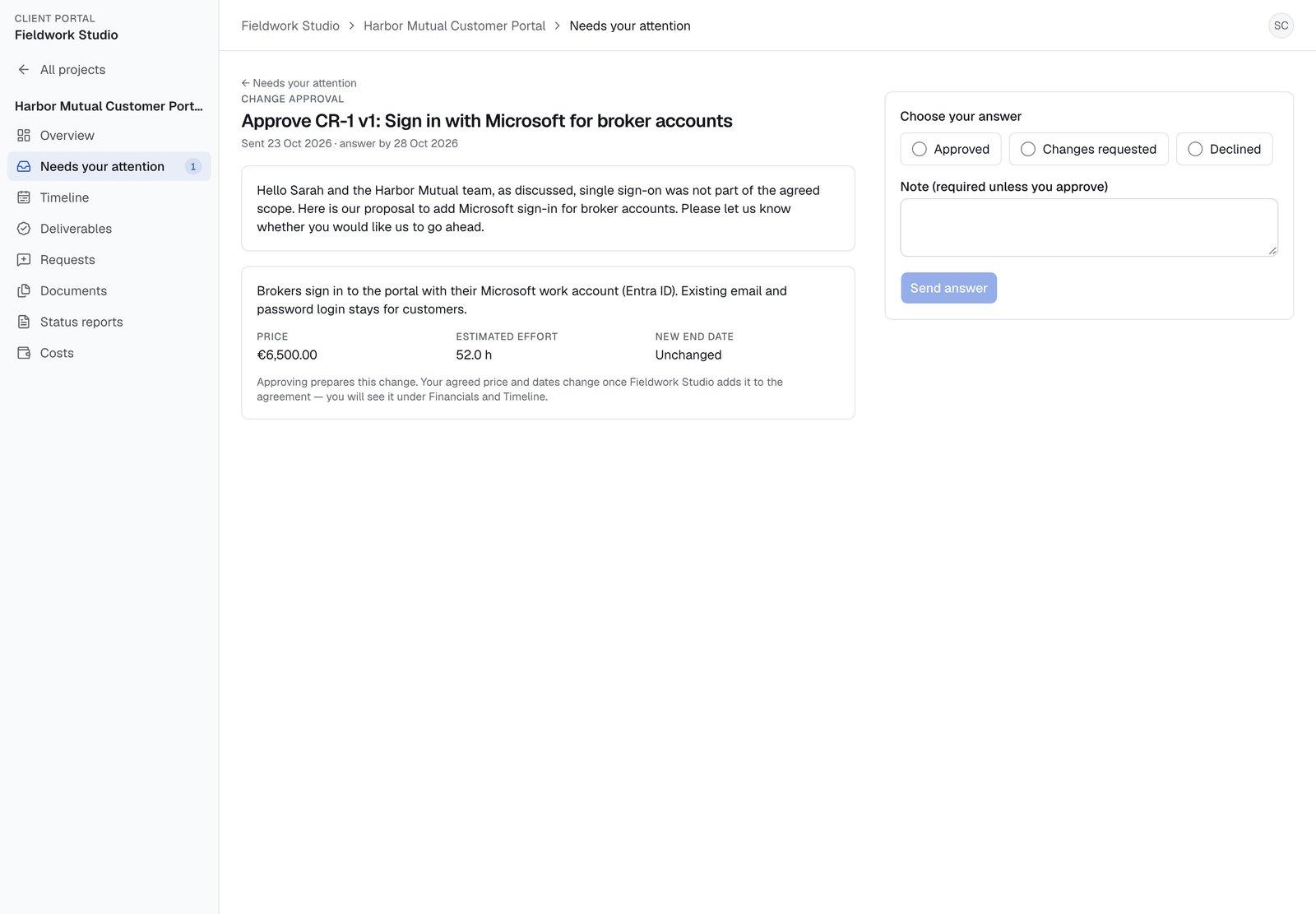
The same decision in the client portal, with the proposal and a form to choose an answer
Fig. 5 — The same decision inside the client portal.
Step 4

The approval becomes the plan.

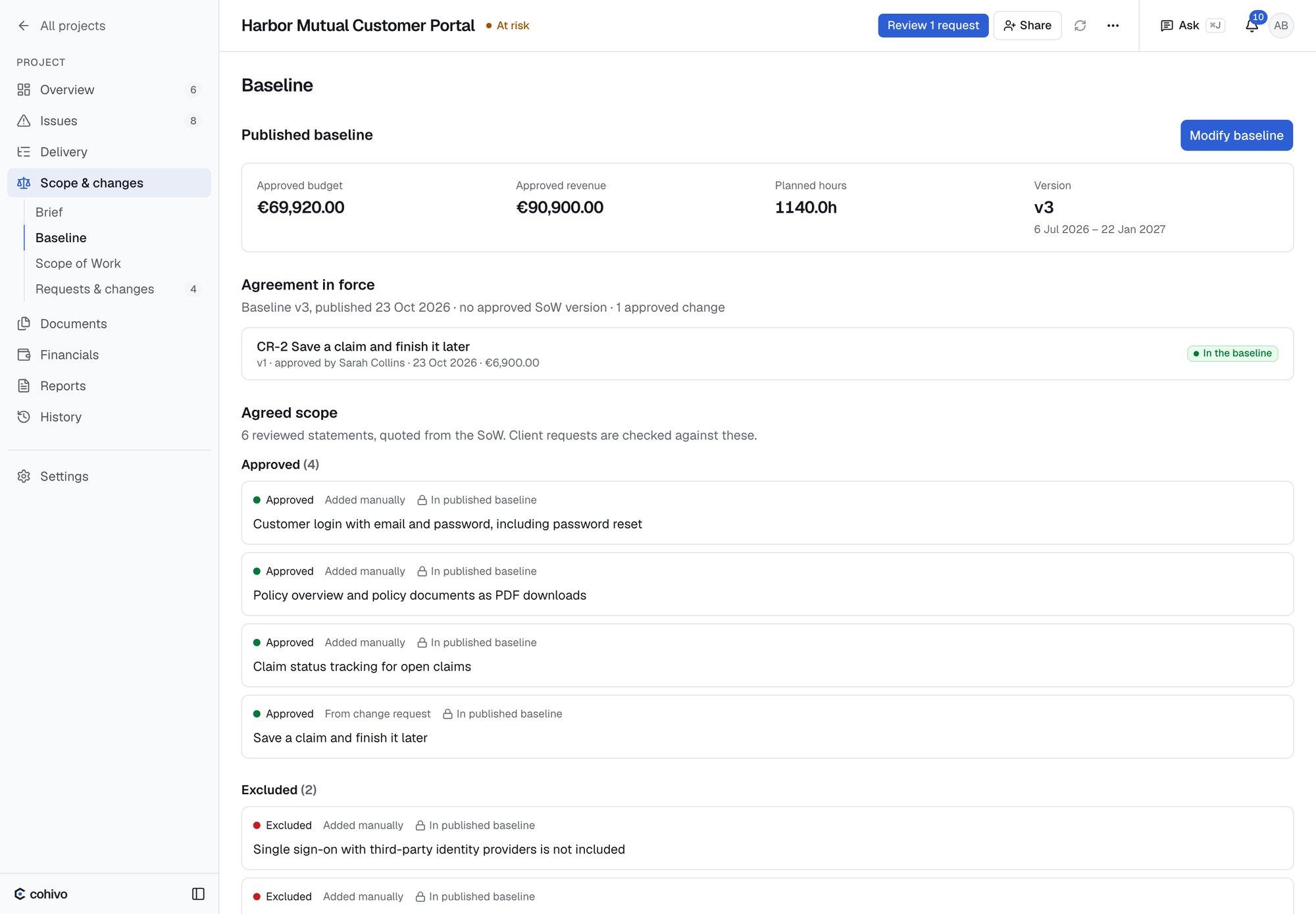
An approved change updates the agreement, drafts the next baseline and lines up the delivery tasks, but only after the team publishes it. Delivery is then checked against the new agreement.
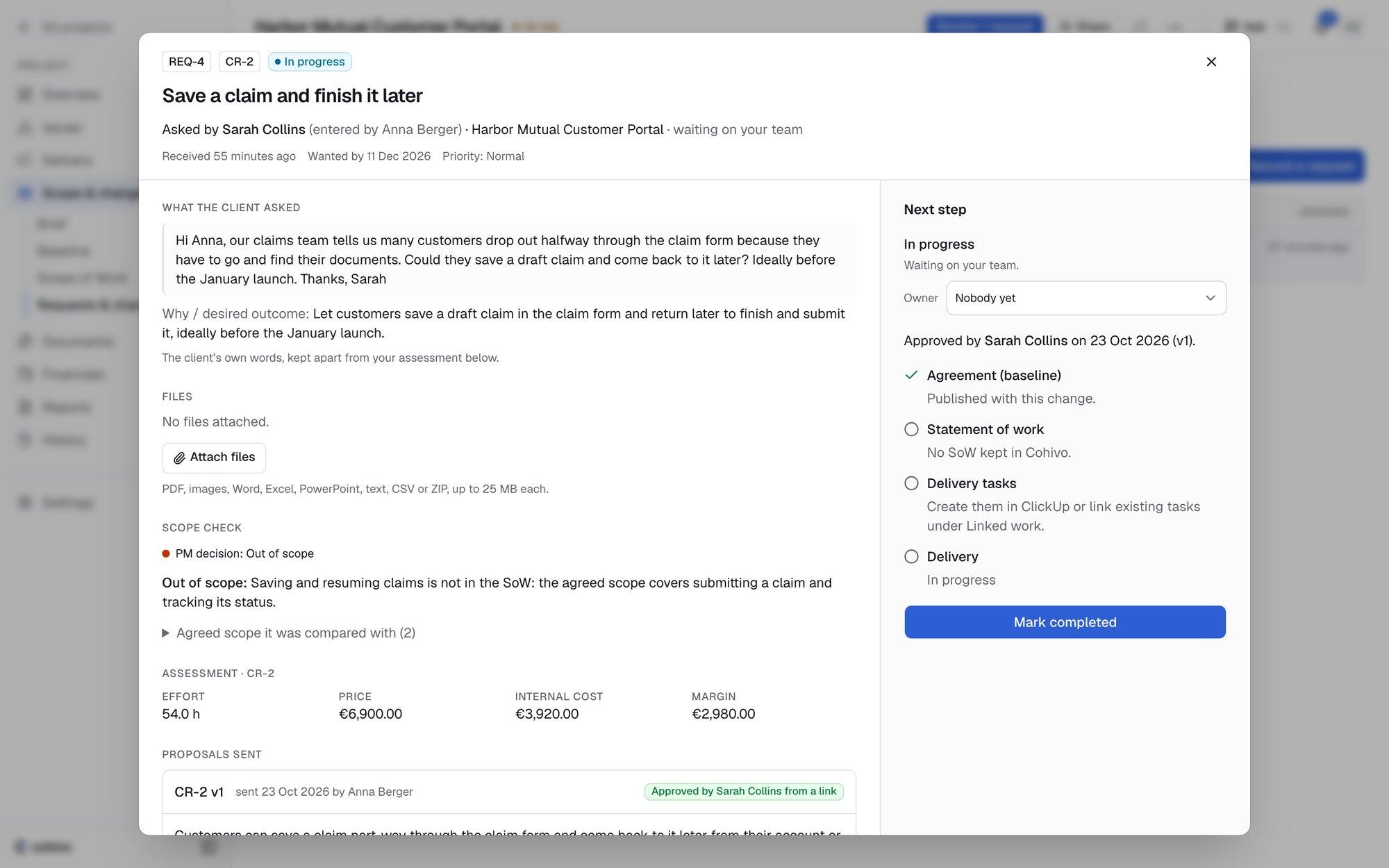
Change request approved by Sarah Collins from a link, with the next steps: agreement, statement of work, delivery tasks and delivery
Fig. 6 — Approved from a link, with who decided and when, and a checklist of what changes next.
Baseline: the published baseline with approved budget and hours, the agreement in force and the list of approved and excluded scope
Fig. 7 — The agreement in force: what’s approved, what’s excluded, and which change added what.
05 · Where it is now

“AI gets you to a working product fast. The hard part is still deciding what the product is for.”

Cohivo runs a guided pilot with agencies of about 10 to 100 people. The validation target: five design partners using it on live projects for eight weeks, recovering more value than the subscription costs.